

What a Wall-Street Trader Taught Me About Choosing Dinner
A billion dollar brain on risk, reward… and ravioli

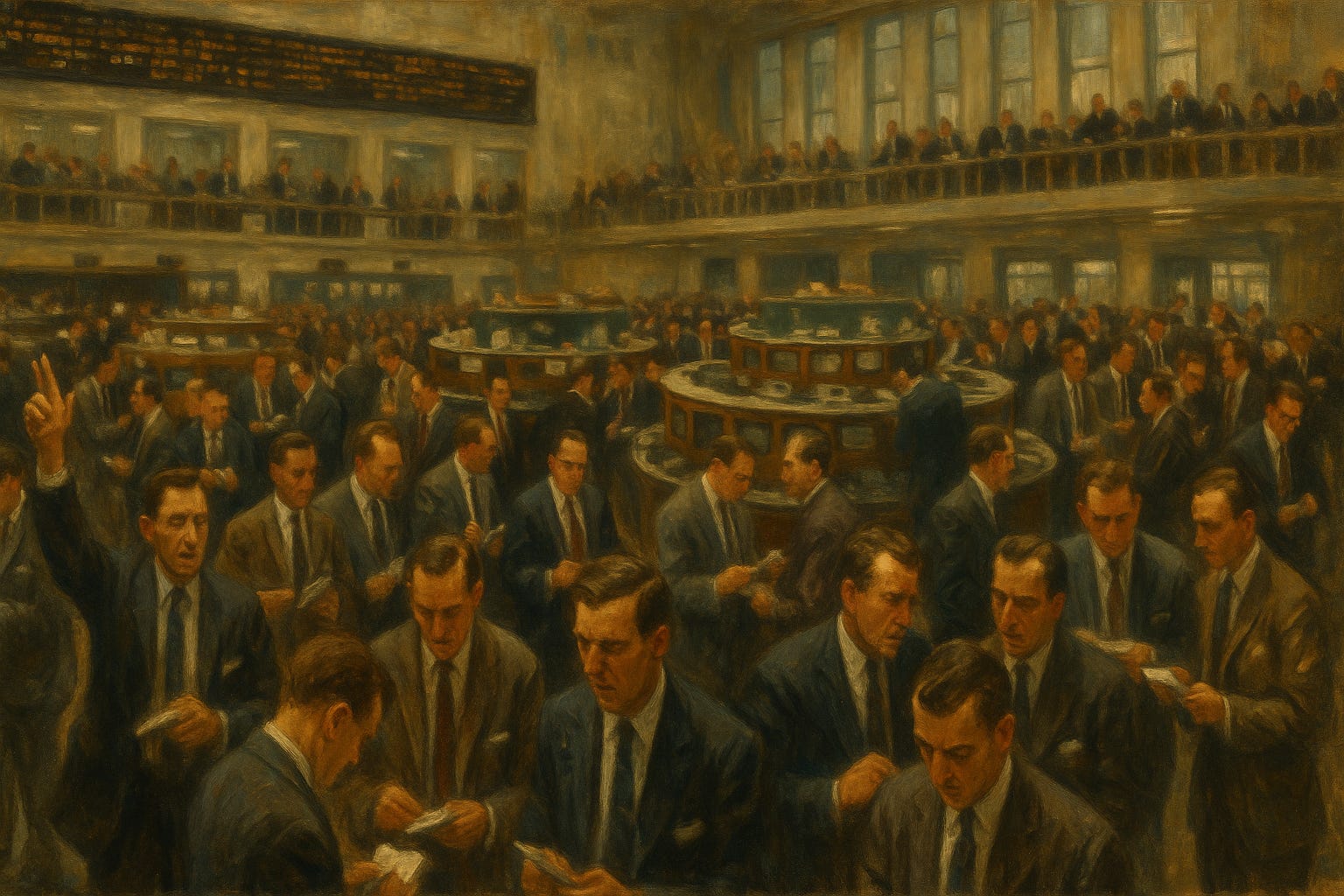
Your life right now? It’s nothing but a giant pile of choices. Thousands of little decisions stacked on top of each other, day after day, brick after brick. That’s what made you. That’s what’s still making you.
And here’s the brutal truth: one day, when you’re lying on your deathbed, staring at the ceiling, you’ll be nothing more than the sum of those choices. Every yes, every no, every “maybe later.” That’s it.
Sound paralyzing? Yes? Well, that’s exactly why so many people freeze like deer in headlights whenever a real decision shows up.
The real fear isn’t making the wrong call. The real fear is waking up one day and realizing you never really lived at all.
And all this sh*t show begins at dinner.
Domestic Quarrel
“So darling, what would you like to eat this evening?”
“I don’t know… What do we have?”
Sound familiar? It’s the same damn script played out in kitchens every night. A “simple” choice that secretly eats away your brainpower like termites in the floorboards.
Those little choices, repeated day after day, carve you into the person you’ll become.
Pick wrong often enough, and it shows up in your waistline, your energy, your mood, even how you see yourself in the mirror.
It's not as silly an example as you might think.
Go peek inside the shopping bags at your local grocery store. Chips, sodas, garbage wrapped in plastic that’s slowly poisoning them. People make the wrong choices on autopilot, and whether they know it or not, the bill always comes due.
If’s Your Fault
But here’s the good news: you’ve got way more control over your life than you give yourself credit for.
And here’s the bad news: if you’re honest, most of the crap that happens to you is your own damn fault.
Don’t take it personally, but let’s get real:
That car accident? Odds are you weren’t paying attention.
That bar fight? You didn’t “just happen” to be there—you chose the wrong bar at the wrong time.
That endless line at the grocery store? You went shopping Sunday at 5 PM with every other idiot in town.
I recently stumbled into the world of trading and finance and what I found changed the way I look at life itself, much more than just tips for earning a few extra quid.
The deeper I dug, the more I realized that markets aren’t just about money…
They’re about human nature, choices, and survival.
And once you see that, you can’t unsee it.
Think Like a Trader
The fancy lines and colors in price charts is nothing more than the world screaming, in real time, how much it thinks something is worth.
Every uptick, every drop—it’s just supply and demand arm-wrestling in front of your eyes.
A collective judgment.
And here’s the thing: traders aren’t just watching it. They’re betting on where it goes next. They’ve got to stick their necks out, predict the damn future, and put money on the line.
Forget Miss Irma with her tarot cards. Real traders are the closest thing to fortune-tellers this planet has.
How Do They Do This?
I’m no professional trader. But I’ll tell you why the best of them are worth studying.
They’ve trained their brain to filter out the noise and lock onto the signal that really matters: human behavior.
Take the pandemic.
People locked indoors, flights canceled, highways empty, yet oil still being pumped out of the ground, but nobody using it.
Supply climbing, demand evaporating.
What happens?
Prices crash like a drunk down a staircase.
Traders don’t just see “oil.” They see the chain reaction. One event tugging the next, like pulling a thread until the whole sweater unravels.
That kind of thinking doesn’t just make money on Wall Street. It works everywhere. Relationships. Career moves. Everyday choices.
If you can trace the string and see the story before it plays out, you’ll always be three steps ahead of the herd.
Example
What do most people do after work?
They grab the kids, fight through the grocery store, then rush home to cook dinner before bedtime. So if you want to avoid the stampede, when’s the smart time to shop?
Not when the herd moves. But just after. Or later, when the families are chained to the stove and tucking kids in.
That’s logical decision-making,
That’s predicting human behavior.
Now, here’s where it gets juicy:
Once you learn to predict, the next level is managing risk. How much are you willing to lose to get what you want?
That, my friend, is a whole other beast. And if you’d like me to tear into it for you, say the word. I’ll write the next piece just for you.
Until next time,
Have a good day,
Julfi,